

- jp-devs
How to Choose Flooring That Fits Daily Use
Choosing flooring based only on color, pattern, or price can create problems once it faces everyday traffic, spills, pets, furniture, and frequent cleaning. In Somerville, MA, flooring also needs to account for seasonal moisture, tracked-in snow, salt, and the demands of busy residential spaces. The right flooring should match how each room is used and maintained while providing practical long-term performance.
How Should Flooring Match Your Daily Activity
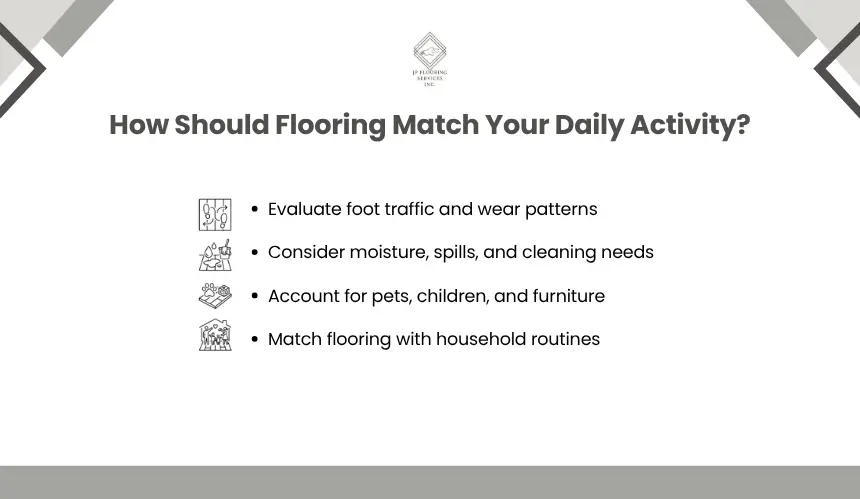
Everyday activity determines how much physical stress and maintenance a floor will experience. For Somerville homes, consider both household routines and seasonal conditions before selecting a flooring material.
How Does Foot Traffic Affect Flooring Choice?
Foot traffic is one of the clearest indicators of how much wear a floor may experience. Entryways, hallways, kitchens, and frequently used living areas in Somerville homes can experience repeated traffic throughout the day, making wear resistance, abrasion resistance, and surface durability important considerations.
Outdoor dirt and grit can gradually abrade flooring, while repeated furniture movement can create additional wear. This is particularly relevant around entrances where footwear can track in debris during Somerville’s wetter and colder months. A flooring product designed for heavier residential traffic is generally more suitable for these conditions than one selected primarily for appearance.
Traffic patterns also matter. A narrow hallway may experience concentrated wear along a specific path, while an open living area distributes traffic more widely. Understanding how people move through your Somerville home helps determine the performance level required.
How Should You Account for Moisture, Spills, and Cleaning?
Moisture exposure can significantly influence flooring selection. Kitchens may experience food and liquid spills, bathrooms face regular water exposure, and entryways can receive moisture from wet footwear. In Somerville, seasonal snow and precipitation can also increase the amount of moisture and outdoor residue brought indoors.
When comparing products, distinguish between water-resistant flooring and flooring marketed as waterproof. These terms can represent different levels of protection, so review the manufacturer’s specifications instead of assuming that every product within a flooring category performs identically.
Cleaning requirements should also match your routine. If a Somerville entryway or kitchen requires frequent cleaning, choose a surface and finish that can tolerate the manufacturer’s recommended cleaning methods without creating excessive maintenance demands.
How Do Pets, Children, and Furniture Influence Flooring Needs?
Households with pets and children often place greater demands on flooring. Claws can create surface scratches, dropped objects can cause dents, and spills can become more frequent. Furniture can also create concentrated pressure points or repeated abrasion when chairs and tables are moved.
For these environments, consider scratch resistance, stain resistance, dent resistance, and ease of cleaning. Pet-friendly flooring should also make it easier to remove hair, dirt, and accidental spills from frequently used areas.
Furniture placement matters as well. Heavy cabinets may remain stationary, while dining chairs and office furniture can move repeatedly across the floor. These different forms of stress should be considered when selecting flooring for an active Somerville household.
Which Flooring Performance Factors Matter Most?
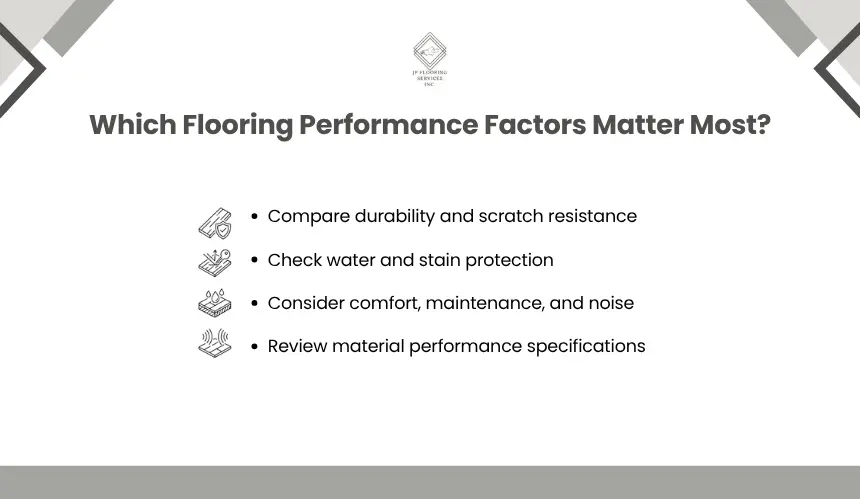
Once you understand how your Somerville home is used, compare flooring options according to performance characteristics. Durability, moisture resistance, maintenance, comfort, and acoustics can all affect whether a floor remains practical over time.
What Makes Flooring Durable and Scratch-Resistant?
Flooring durability depends on factors such as material composition, construction, surface finish, and, for some products, the thickness and quality of the wear layer. These characteristics influence how well the surface handles repeated abrasion and everyday impacts.
For busy Somerville households, look beyond the flooring category itself. Two products classified under the same flooring type can have different specifications and performance levels. Reviewing manufacturer information provides a more reliable comparison than selecting a product based solely on appearance.
Scratch resistance is especially relevant where pets, children, movable furniture, or abrasive debris are present. A durable floor should be selected according to the specific type and intensity of wear expected in the room.
How Important Are Water and Stain Resistance?
Water and stain resistance become more valuable as exposure increases. A kitchen floor may encounter cooking spills and repeated cleaning, while a bathroom can experience substantially more direct moisture. Entryways in Somerville homes also need to handle moisture and residue tracked in from outdoors during wet or snowy weather.
Stain resistance is useful in dining areas, children’s rooms, and homes with pets because spills may remain on the surface until they can be cleaned. Flooring that limits absorption can make routine cleanup more manageable.
However, surface resistance does not eliminate the importance of proper installation. Seams, transitions, subfloor conditions, and moisture management can influence the finished floor’s overall performance.
Do You Know?
Flooring performance can be affected by conditions beneath the finished surface, not just the flooring material itself. The National Wood Flooring Association’s installation guidance addresses concrete moisture testing and moisture-related considerations before wood flooring installation.
How Do Comfort, Maintenance, and Noise Affect Flooring?
Durability is only one part of everyday flooring performance. The floor also affects how a room feels and sounds during normal use.
Hard surfaces can transmit impact sounds from footsteps, dropped objects, and moving furniture, while some resilient or softer flooring systems can provide a different underfoot experience. This can be relevant in multi-level Somerville homes where noise transfer between rooms or floors is a consideration.
Maintenance requirements should also be considered before purchase. Check whether the flooring requires specific cleaning products, periodic refinishing, protective measures, or other specialized care. A material that fits your household routine is more practical than one that requires maintenance beyond what you can consistently provide.
How Do You Choose Flooring for Each Room?
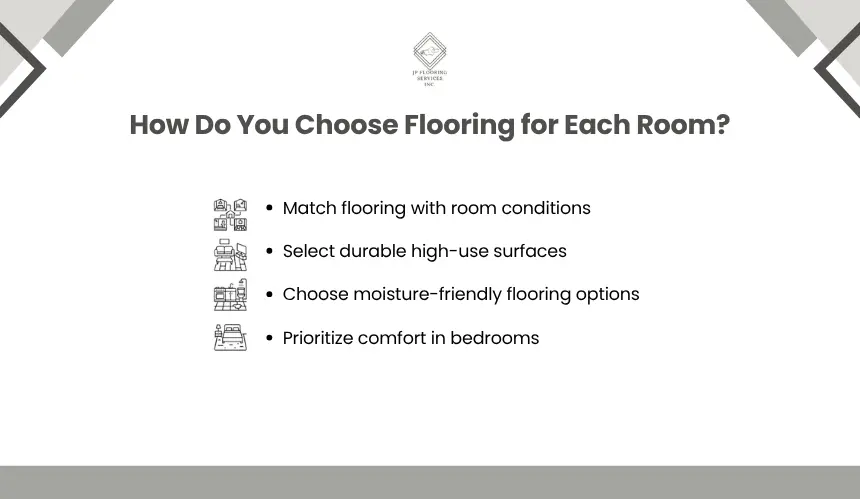
Different rooms have different flooring needs, so consider traffic, moisture, comfort, maintenance, and installation requirements before choosing one material for the entire home.
In Somerville, MA, residential tile can be especially useful in kitchens, bathrooms, and entry areas exposed to wet footwear, road salt, and winter moisture.
In Union Square, East Somerville, and Magoun Square, where compact homes may have high-use connected spaces, residential tile offers a durable, easy-to-clean surface while proper subfloor preparation and installation help it perform through Somerville’s seasonal temperature and moisture changes.
What Flooring Works Best for High-Traffic Living Areas?
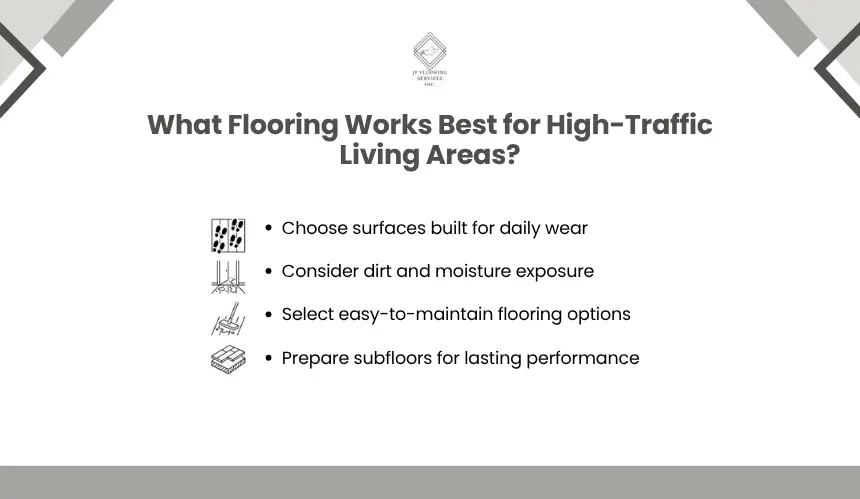
Living rooms, hallways, and entryways need flooring that handles frequent use, scratches, dirt, and wear. In Somerville homes, entryways should also account for moisture and seasonal debris brought indoors. Durable, easy-to-clean flooring, along with mats and regular sweeping, can help reduce surface wear.
In Somerville, MA, LVP suits busy homes exposed to wet weather, tracked-in snow, salt, and everyday wear. In areas such as Davis Square, Winter Hill, and Teele Square, its easy maintenance and resilient surface make LVP flooring practical for kitchens, entryways, and connected living spaces. Proper subfloor preparation remains essential for reliable performance through seasonal temperature and moisture changes.
Which Flooring Is Best for Kitchens, Bathrooms, and Moisture-Prone Spaces?
Kitchens and bathrooms require flooring suited to spills, water exposure, and frequent cleaning. Tile and certain resilient flooring options may work well, but always check the product’s water resistance, installation requirements, seams, and subfloor compatibility. Entry areas may also need moisture-resistant solutions during wet weather.
What Flooring Fits Bedrooms and Lower-Traffic Rooms?
Bedrooms offer more flexibility, allowing homeowners to prioritize comfort, warmth, acoustics, appearance, and maintenance. Because these rooms typically experience less concentrated wear, flooring can be selected more around lifestyle and comfort while still considering cleaning needs.
Ultimately, Somerville homeowners should match flooring to how each room is used, exposed to moisture, cleaned, and affected by seasonal conditions.
For reliable flooring solutions tailored to your home’s needs, JP Flooring Services provides professional flooring installation and flooring services in Somerville, MA. Whether you’re upgrading a high-traffic area, refreshing a kitchen or bathroom, or replacing worn flooring, their team can help you select and install a practical option suited to your space.
Frequently Asked Questions
What Is Flooring Acclimation and Why Does It Matter?
Flooring acclimation allows certain materials, particularly wood products, to adjust to the temperature and humidity conditions of the installation environment before installation. The required acclimation period varies by product, so installers should follow the manufacturer’s specifications rather than applying a universal timeframe.
What Is a Flooring Expansion Gap?
An expansion gap is a planned space left around the perimeter of certain flooring installations to accommodate natural expansion and contraction. The required gap depends on the flooring type, room conditions, and manufacturer requirements. Covering or eliminating these spaces incorrectly can contribute to buckling, gapping, or other installation problems.
How Does Subfloor Flatness Affect Flooring Installation?
Subfloor flatness can directly affect the finished appearance and performance of flooring. Excessive unevenness may cause movement, visible irregularities, joint stress, or premature wear. Before installation, the subfloor should be evaluated against the flooring manufacturer’s specified flatness and preparation requirements.
What Is the Difference Between Floating and Glue-Down Flooring Installation?
A floating floor is installed without being mechanically fastened to the subfloor, allowing the flooring system to rest over an appropriate underlayment or approved substrate. Glue-down flooring is bonded directly to the prepared subfloor using an adhesive specified for that flooring system. The correct installation method depends on the product, substrate, room conditions, and manufacturer requirements.