

- jp-devs
Flooring Mistakes Homeowners Should Avoid Before Installation
Replacing flooring can quickly become more complicated when homeowners overlook the condition of the existing floor or choose materials without considering how the space is used. This is especially relevant in Somerville, MA, where many homes are older and renovation projects may uncover uneven or previously modified substrates.
Mistakes to Avoid Before Choosing Flooring
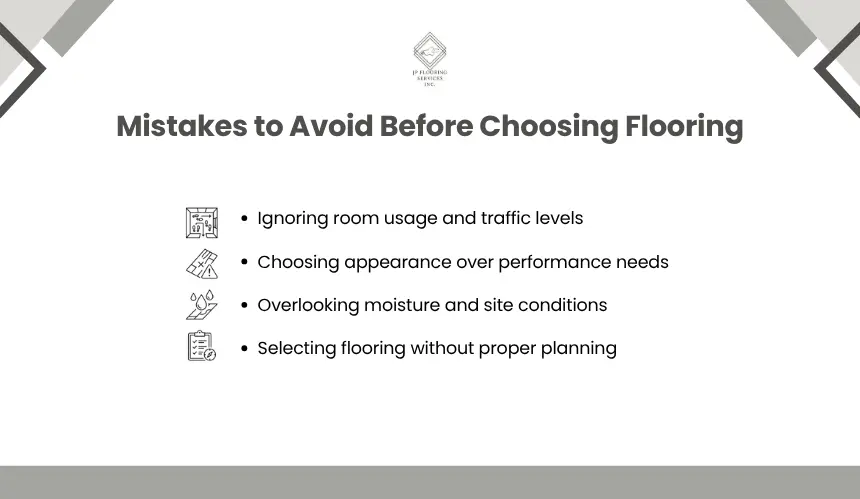
The right flooring should match how the room is used, maintained, and exposed to daily wear. Before selecting a material, homeowners should consider traffic levels, moisture exposure, maintenance demands, and the existing conditions of the space.
Ignoring Room Use and Traffic
Flooring should reflect how a room functions every day. Entryways and hallways may experience constant foot traffic, while kitchens face spills and frequent cleaning. Bedrooms generally have different durability requirements.
In Somerville homes, where compact layouts can connect several high-use areas, selecting a material based only on color or style can result in unnecessary wear. Consider foot traffic, furniture movement, pets, cleaning routines, and the expected service life before choosing a product.
Choosing Appearance Over Performance
A flooring sample can look ideal while being poorly suited to the conditions of the room. Durability, scratch resistance, moisture tolerance, maintenance requirements, installation method, and manufacturer specifications should be evaluated alongside color, texture, and plank design.
A visually appealing floor that requires more maintenance than the homeowner expects can become a poor long-term choice.
Overlooking Moisture and Environmental Conditions
Moisture should be evaluated before flooring is selected and installed. Concrete slabs, basements, kitchens, bathrooms, exterior-adjacent areas, and areas with previous leaks can present different moisture risks.
For a Somerville renovation, this is particularly relevant when replacing flooring in an older property where previous remodeling may have altered the substrate or concealed moisture-related issues. The flooring material and installation system should be compatible with the actual site conditions.
Do You Know?
The City of Somerville’s Home Improvement Program specifically focuses on improving existing housing and addressing property conditions, reflecting the importance of evaluating existing homes before renovation work.
Mistakes in Subfloor Preparation
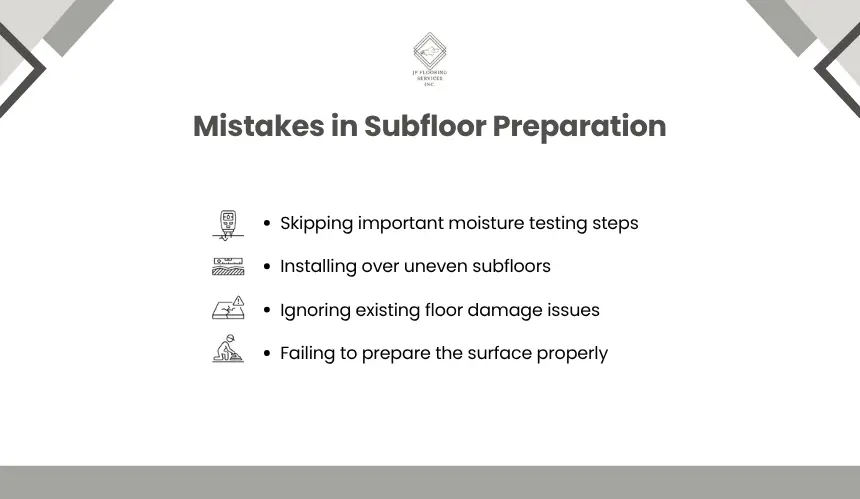
The finished floor can only perform as well as the substrate beneath it. Subfloor problems should be identified and corrected before installation begins.
Skipping Moisture Testing
A dry-looking surface does not necessarily mean the substrate meets the flooring manufacturer’s moisture requirements. Depending on the flooring system, testing may involve concrete moisture testing or wood moisture meters.
Testing before installation provides measurable information about whether the substrate is ready. Installing first and investigating moisture only after flooring begins to move, separate, or deteriorate creates avoidable repair work.
Installing Over Uneven or Damaged Subfloors
Uneven subfloors can create movement, gaps, visible irregularities, hollow areas, and premature wear. Damaged wood substrates may also lack the stability required for the new flooring system.
This deserves particular attention during older-home renovations in Somerville. Existing properties may have undergone multiple flooring replacements, making it necessary to inspect what lies beneath the current surface rather than assuming the substrate is installation-ready.
Failing to Address Existing Floor Problems
A new floor should not be used to conceal unresolved substrate problems. Loose materials, structural movement, water damage, deteriorated sections, adhesive residue, and unsuitable existing surfaces can interfere with installation.
The correct solution may involve repair, leveling, removal, drying, or replacement of affected sections before the finished flooring is installed.
Installation Planning Mistakes
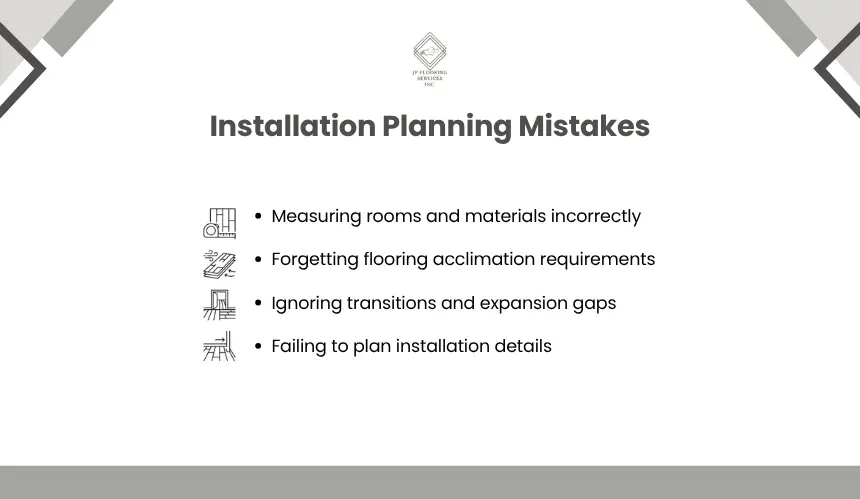
Accurate preparation reduces material waste and prevents layout or installation problems from appearing once the project is underway.
Incorrect Measurements and Material Quantities
Flooring quantities should account for the actual room dimensions, cuts, waste, pattern direction, closets, doorways, and irregular areas. Ordering only the exact calculated square footage can leave insufficient material for installation or future repairs.
For multi-room Somerville homes, measurements should be taken room by room rather than relying on a single overall estimate.
Forgetting Acclimation Requirements
Acclimation requirements differ between flooring products. Some materials require specific temperature and humidity conditions before installation, while others have different requirements established by the manufacturer.
The mistake is treating acclimation as a universal procedure. Always follow the instructions for the exact product being installed.
Not Planning Transitions, Layout, and Expansion Gaps
Floor direction, room transitions, doorways, fixed objects, and perimeter clearances should be determined before installation starts.
Expansion gaps are particularly important for flooring systems that require room for natural movement. Omitting the required clearance can contribute to buckling, peaking, or other installation problems.
Flooring Material and Installation Errors
Even a suitable flooring product can perform poorly when the installation system is incorrectly specified or applied.
Using the Wrong Underlayment or Adhesive
Underlayment selection depends on the flooring type, substrate, installation method, and required performance characteristics. Adhesives likewise need to be compatible with the flooring and substrate.
Using a generic product without checking compatibility can compromise bonding, moisture management, sound performance, or manufacturer requirements.
For commercial properties, VCT tiles can be a practical choice when easy maintenance, durability, and localized replacement are priorities. In Somerville, MA, businesses around Boynton Yards, Brickbottom, and Inner Belt can benefit from VCT in busy interiors that experience regular foot traffic and frequent cleaning, provided the substrate, adhesive, and maintenance plan are properly matched to the space.
Ignoring Manufacturer Installation Requirements
Manufacturer instructions may specify substrate tolerances, moisture limits, adhesive types, installation temperatures, expansion clearances, underlayment requirements, and approved installation methods.
These specifications should be treated as project requirements rather than optional recommendations.
Choosing DIY Installation When Professional Installation Is Needed
Simple flooring projects may be manageable for experienced DIY homeowners, but complex layouts, extensive substrate repairs, moisture concerns, glue-down systems, or specialty materials require greater technical control.
For older Somerville properties, professional assessment can be particularly useful when the existing substrate has been modified repeatedly or its condition is uncertain.
For commercial spaces in Somerville, flooring needs to withstand tracked-in moisture, winter salt, heavy foot traffic, and frequent cleaning without becoming difficult to maintain.
With the area experiencing substantial snowfall and cold-weather conditions, entrances and high-traffic zones deserve particular attention to slip resistance, grout performance, and moisture management.
For businesses around Union Square, Davis Square, and Assembly Square, commercial tiles can provide a durable, cleanable surface when the tile, substrate, and installation method are matched to the space.
Final Checks Before Flooring Installation
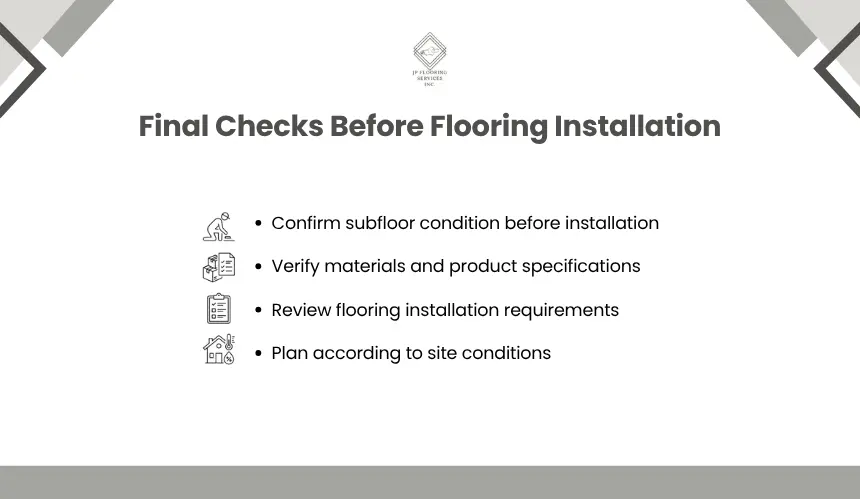
A final inspection gives homeowners an opportunity to resolve preventable issues before flooring materials are permanently installed.
Confirm the Subfloor Condition
Verify that the substrate is structurally sound, sufficiently level, clean, dry, and appropriate for the selected flooring system.
Verify Material Quantity and Specifications
Confirm flooring quantities, trim, transitions, underlayment, adhesives, and other installation materials before work begins.
Review Installation Requirements
Check the manufacturer’s instructions for moisture limits, acclimation, expansion space, substrate preparation, and installation method.
Plan for Site Conditions
Temperature, humidity, ventilation, moisture, and room conditions should meet the requirements of the flooring product before installation.
Confirm Installer Experience and Project Scope
Make sure the installer understands the flooring system, preparation requirements, layout, and any substrate repairs required for the project.
For homeowners planning flooring installation in Somerville, MA, addressing these details before installation can prevent problems that are considerably more expensive to correct after the finished floor is in place. The City of Somerville also notes that flooring itself is among the interior work that does not require a building permit, although other remodeling work within the same project may have separate requirements.
Do You Know?
Somerville’s housing programs specifically address improvements to existing homes, including repairs and rehabilitation work. For homeowners renovating older properties, evaluating existing conditions before installing new finishes can help identify work that needs attention first.
Ready to upgrade your floors? JP Flooring Services provides professional flooring installation in Somerville, MA, helping homeowners and businesses choose suitable materials, prepare the substrate properly, and achieve a durable, well-finished result. Contact JP Flooring Services to discuss your flooring project and installation needs.
Frequently Asked Questions
What Is the Biggest Mistake to Avoid Before Flooring Installation?
Ignoring the condition of the subfloor is one of the most consequential mistakes. Moisture, unevenness, damage, or movement beneath the finished floor can cause problems after installation.
Does All Flooring Need to Acclimate Before Installation?
No. Acclimation requirements vary by product. Homeowners should follow the manufacturer’s instructions for the specific flooring being installed.
Should You Moisture Test Before Installing Flooring?
When required by the flooring system, yes. Moisture testing helps determine whether the substrate meets the conditions specified for installation.
Is Professional Flooring Installation Worth It?
Professional installation can be especially valuable when a project involves an older substrate, moisture concerns, complex layouts, extensive preparation, or flooring with detailed installation requirements.